
When a piece of equipment goes down in a commercial kitchen, the clock starts immediately. Every minute offline is a minute of lost output, and in the middle of a dinner rush, that math gets ugly fast.
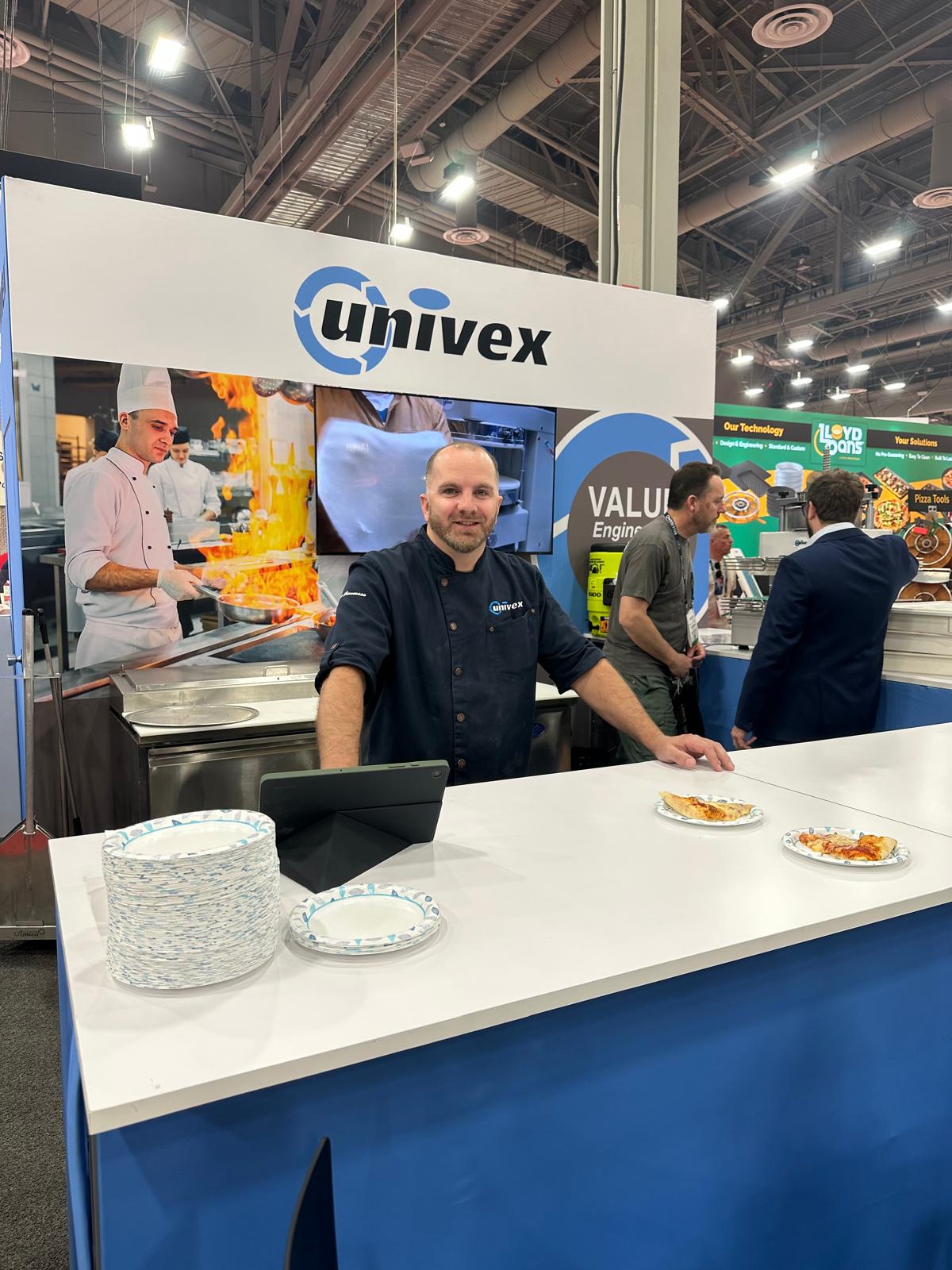
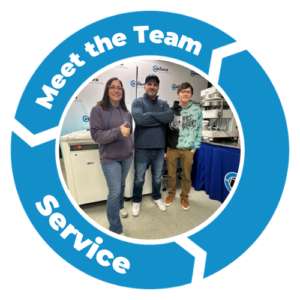
Shaun Giarrusso knows this better than most. As Univex’s National Service Manager, he’s the person responsible for making sure that when something breaks, it gets fixed fast, right, and with as little disruption to the kitchen as possible.
His answer when asked what the Service Department actually does cuts straight to it.
“Supporting machines in the field and doing spare parts orders. If the machine goes down, getting it back up and running as soon as possible.”
Simple enough. But like most things at Univex, there’s a lot more happening underneath.
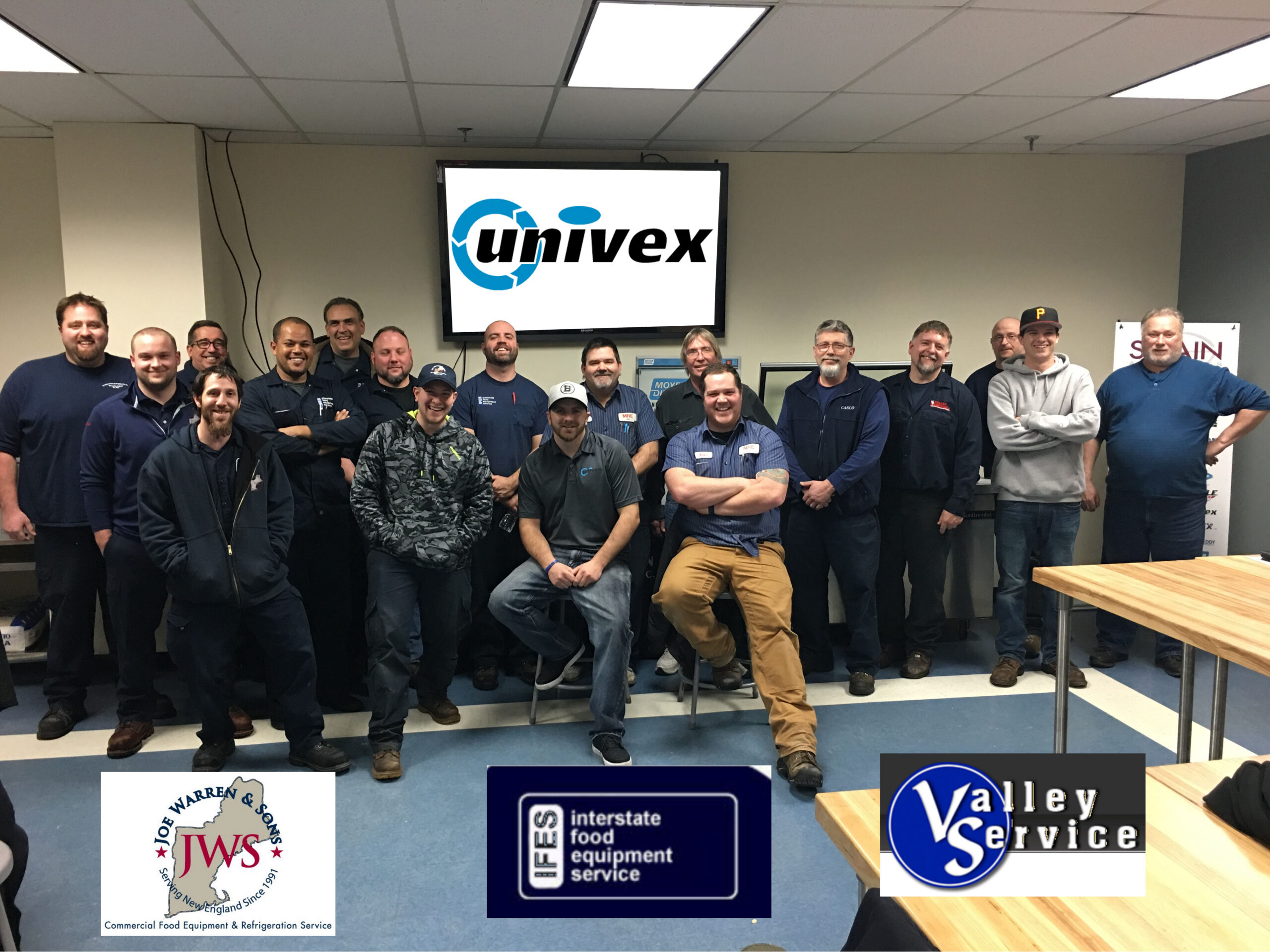
When a call comes in, Shaun’s team gets to work. They pull together the details, create a case in their CRM, and dispatch it to the nearest Authorized Service Agent, one of roughly 300 to 400 independent service companies mapped across the country, sometimes overlapping in coverage, always local to where the equipment lives.
Once a technician accepts the case, Shaun’s team doesn’t disappear. They stay on as the technical backbone:
All the while, sharing the kind of hands-on knowledge that doesn’t always make it into documentation. Tribal knowledge, Shaun calls it. The stuff you only know from having seen it before.
“Once they confirm and accept the case, they’re going out. Technicians will call us for support. We can give them manuals, videos, any technical assistance, maybe some tribal knowledge they might not know. And really just getting it back up and running right away.”
It’s a quiet, invisible infrastructure most customers never think about it until they need it. When they do, it’s already moving.
If you ask Shaun which piece of equipment his team could troubleshoot in their sleep, the answer is the Sprizza, Univex’s pizza dough spinner, designed to mimic the hand-spinning and stretching technique that skilled pizza makers use, scaled for the realities of high-volume shops where the person running the machine might be a teenager on their third shift.
The Sprizza is everywhere from national chain to you ‘House of Pizza’ down the street. The volume of calls means Shaun’s team has seen virtually every variation of every issue, which makes resolution fast and clean.
“We see so many of them” Shaun explains. “We know them kind of inside and out. That would probably be our favorite call to get. Just ’cause it’s simple.”
Simple doesn’t mean trivial. Even something like a unit arriving configured for the wrong hand gets handled with options: walk the operator through a quick field swap, a couple of bolts and maybe 15 minutes, or coordinate a return if that’s what they prefer. The goal is always to solve it at the closest point to the problem.
Not every call is a mechanical failure. Some are user errors that look like failures, and part of Shaun’s job is knowing the difference.
Univex planetary mixers use a variable speed pulley system that allows operators to shift speeds while the machine is running. That’s a deliberate design advantage. Many competitors historically required a full stop before changing gears, which adds up over a long prep shift. Univex built around that friction.
The problem comes when operators used to other equipment shut the machine off before changing gears anyway. Stopping mid-cycle creates slack in the drive belt system. When the machine restarts, that slack causes the belt to snap, wear out prematurely, or throw itself off entirely.
“They shut it off, change the gear, which is a big problem for us because it creates a lot of slack in the pulleys, in the drive belt system. And then when they turn it back on, the belt has no tension. It can pop off, it can wear out easily, and just cause damage inside the mixer.”
The fix isn’t a part. It’s a conversation. And how that conversation goes matters.
“You’ve got to stay calm on the phone. The customer bought the machine from us, so we’ve got to let them know we have their back, tell them how to use it correctly. Be their advocate. And the advocate for our product and our brand.”
That framing says a lot about how Shaun thinks about the role. It isn’t just technical support. It’s relationship management in high-pressure moments.
One underutilized resource Shaun keeps coming back to: the Univex YouTube channel.
Over the past year, the team produced five or six instructional videos specifically geared toward Sprizza operators, including how to replace a counterweight rope, how to handle dry belt tensioning and replacement, how to switch the handle configuration from left to right, and how to make gap adjustments. Short, practical, anyone-can-follow-this material.
When a technician or end user calls in with one of these issues, Shaun’s team can send a link and often have them back up and running without rolling a truck.
“People will call in, say my counterweight rope broke. We’ll say, okay, if you want to do it yourself, we can send you this link. It’s super simple, 10 or 15 minute job. Anybody can really do it.”
It’s not glamorous. But it’s exactly the kind of resource that turns a stressful equipment call into a five-minute fix.
The Service Department has seen some change over the past six months, and Shaun talks about it with the measured optimism of someone who’s been building toward this moment for a while.
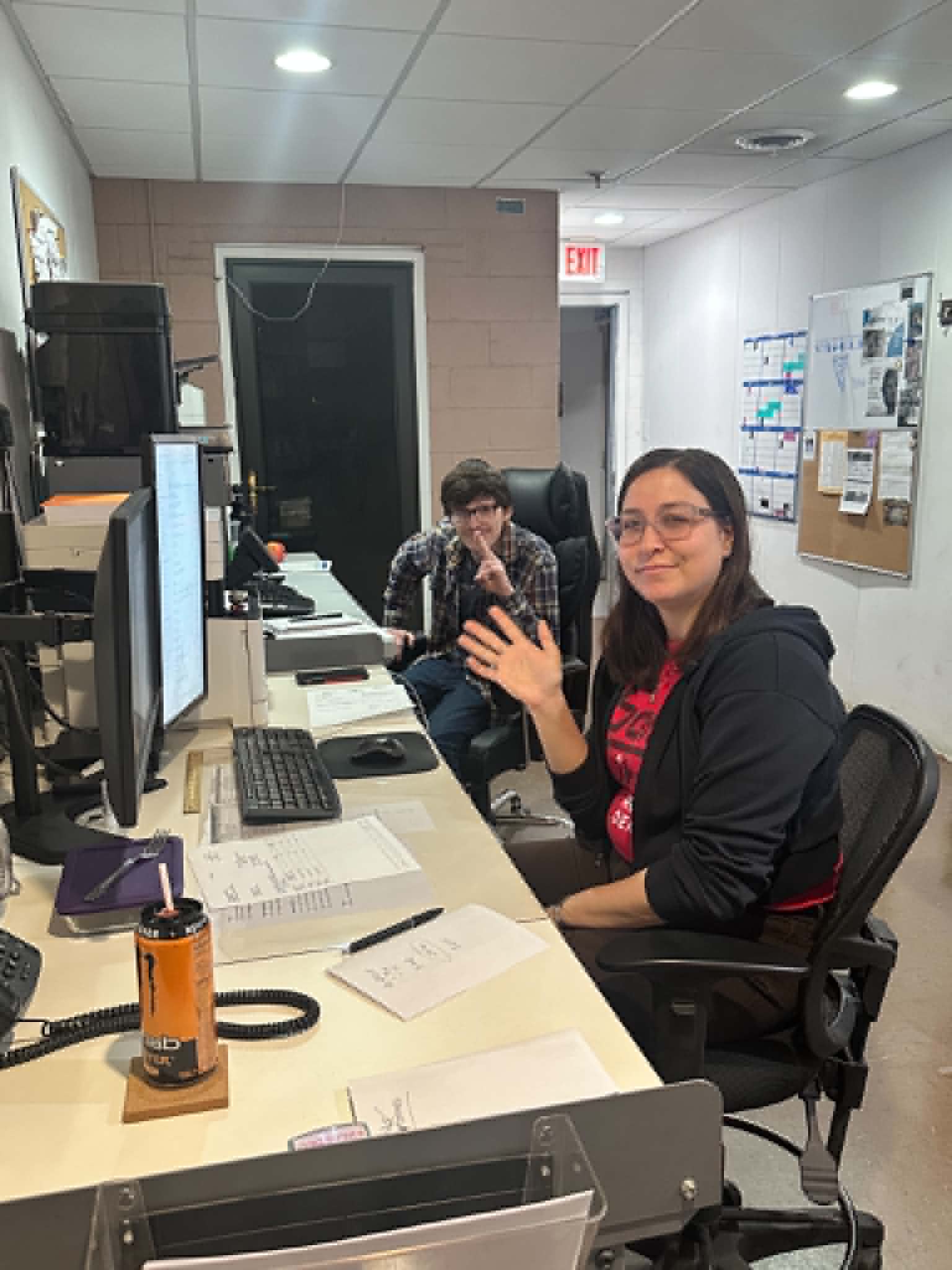
Christine has been handling parts and is now getting trained up on the service side. Andrew just came on board a few weeks ago from the QC and assembly area. He already knows the equipment and that head start matters.
What Shaun says his team does best isn’t the technical knowledge, though. It’s communication.
“When the customer’s machine goes down, if we’re not constantly communicating with them, where the service tech is, where the parts are, what the process looks like, they don’t want to be left in the dark. They just see their machine down and they need to know somebody’s doing something about it.”
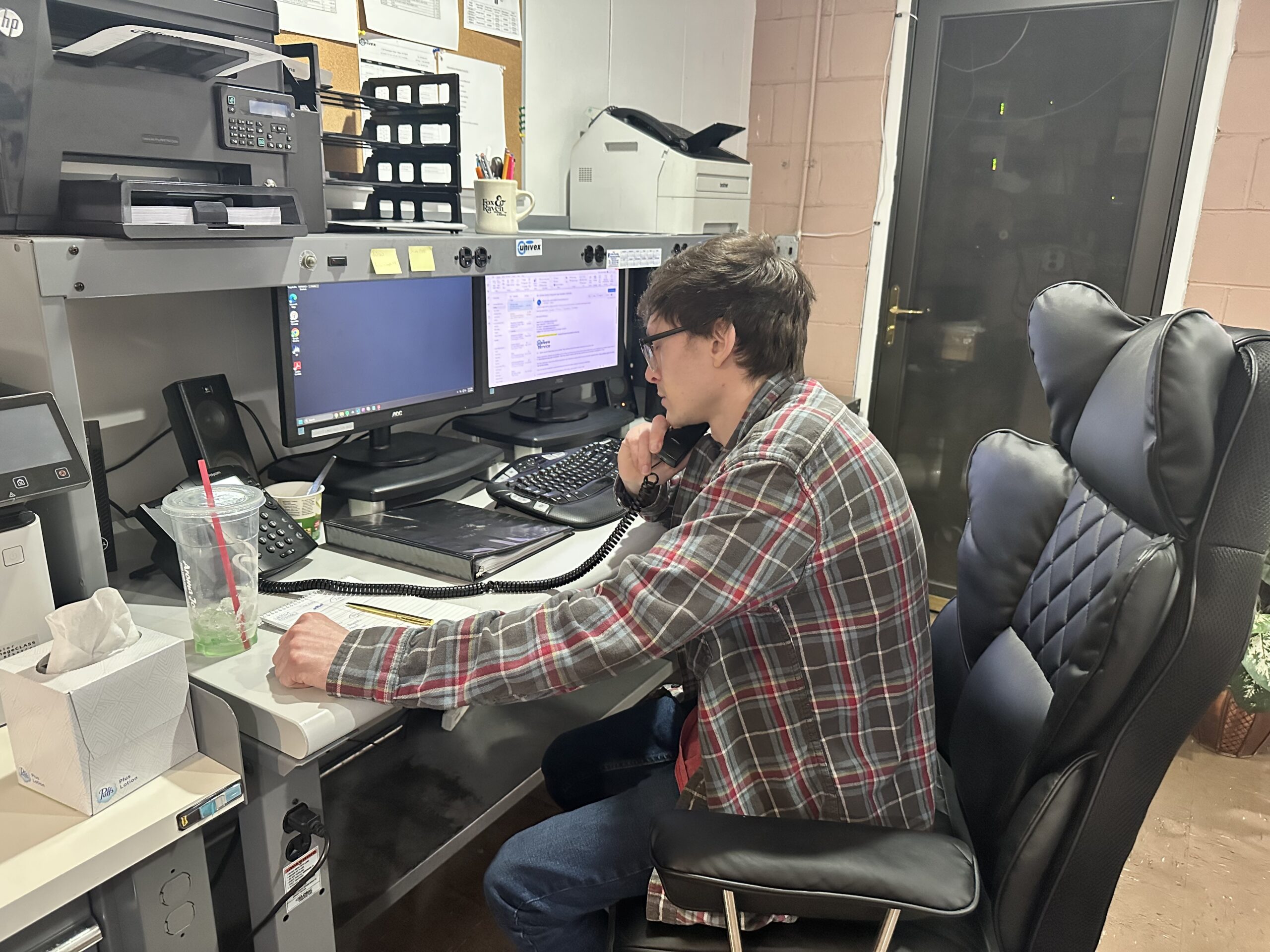
On any given day, the three of them are fielding calls in close proximity to each other. If someone’s working through a tough technical situation, everyone in the room can hear it and pitch in. It’s informal, but it works. Continual, ambient training built into the day.
“If one person’s on the phone and I hear them struggling, or they hear me struggling, we can share what we know. We bounce off each other.”
Shaun was asked, toward the end of the conversation, a hypothetical: if Univex were to shut down tomorrow, what would he want his team to know?
He didn’t hesitate.
“I would like them to know that our work mattered. We kept businesses running. We kept kitchens operating smoothly. We kept customers happy.”
It’s worth sitting with that for a second. Behind every dinner rush that runs on time, every pizza that goes out hot, every batch of dough that makes it through prep, there’s equipment that has to work. And behind that equipment, somewhere, is a team that either fixed a problem before it became a crisis or helped an operator learn how to prevent one altogether.
That’s the Service Department and that’s Shaun’s team.