 Meet the Team: The Small Team Behind Every Shipment
The Weight and Dimensions of Everything
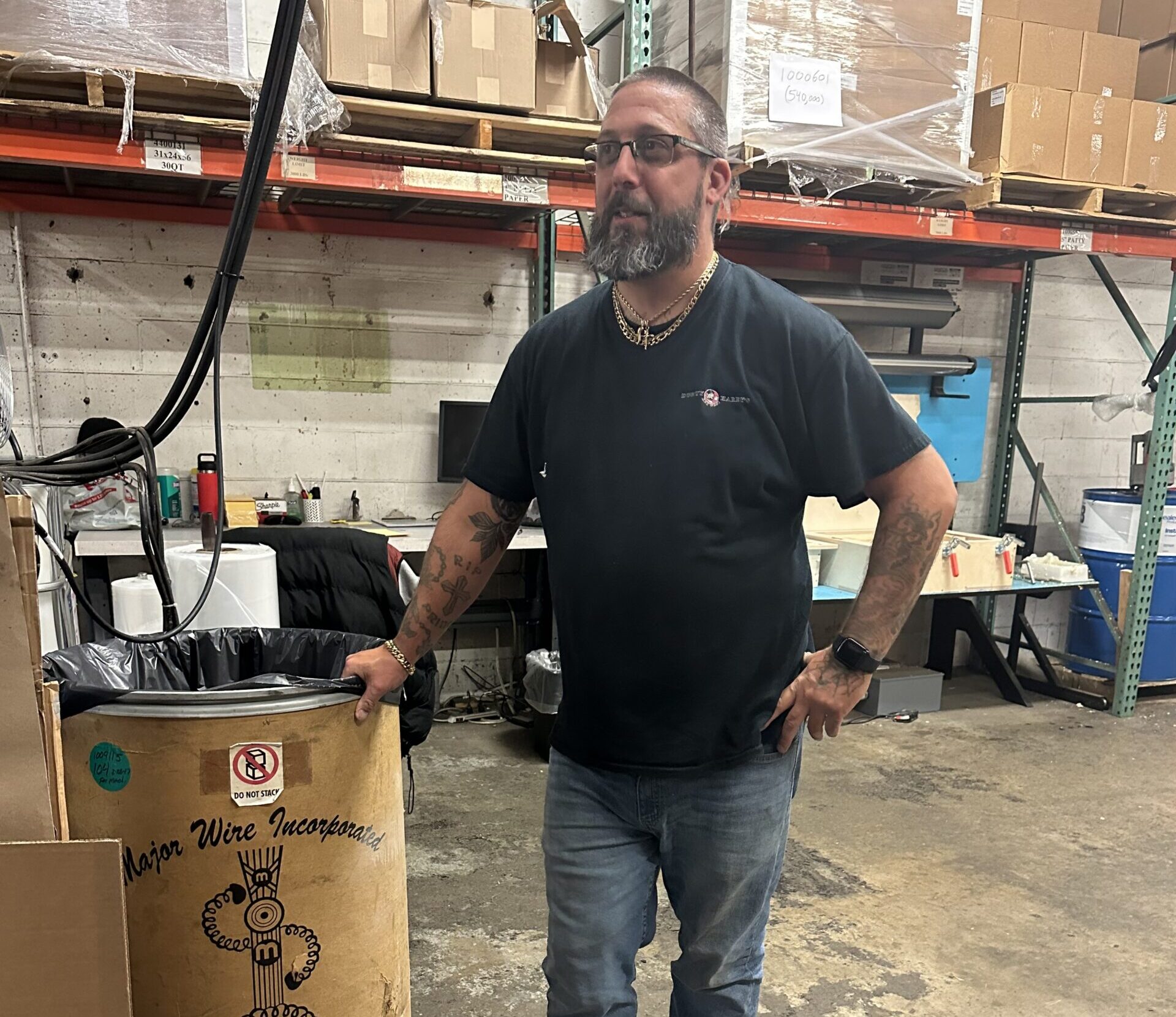
Ask James Fino what the Logistics department does at Univex Corporation, and the answer sounds almost simple.
“Mainly shipping and receiving, all of international orders, domestics. Getting everything picked up internationally, shipping out on time for all the customers.”
But, spend a few minutes with him, and it’s clear that “on time” is doing a lot of heavy lifting in that sentence. Behind that phrase, however, it is a constantly shifting map of ocean freight schedules, carrier reliability, and a level of product knowledge that lives entirely in James’s head.
Where the Clock Never Stops
Transit times are always a moving target and James keeps track of it all.
“A shipment could take four weeks average, but in a couple of weeks it might take fifteen days.”
Fuel cost is part of the story, but the larger one is congestion. Freight leaving Italy typically transships through Antwerp, but right now it’s routing through Spain or Portugal, where it can sit for a week waiting on boats that simply aren’t there. Domestically, the picture isn’t much cleaner. A shortage of drivers and trucks across the carrier industry means a two-day delay can quietly turn into four.
The View From Twelve Years In
James has been doing this for twelve years, long enough that his attention has shifted from the day-to-day to the systems underneath it. For instance, he points to a specific inefficiency overseas: equipment gets staged at a warehouse before it ever reaches the port, sitting for a week without a visible reason.
“They bring it to a staging warehouse. There’s no need. Be able to pick up your stuff, bring it to the port, get it weighed, get it checked, get it through customs, get it on the boat, and it’s on its way. But they stage it for a week.”
That kind of visibility, seeing the friction points not just inside Univex’s warehouse but across the entire international shipping chain, is only possible because James has someone he trusts running the domestic side.
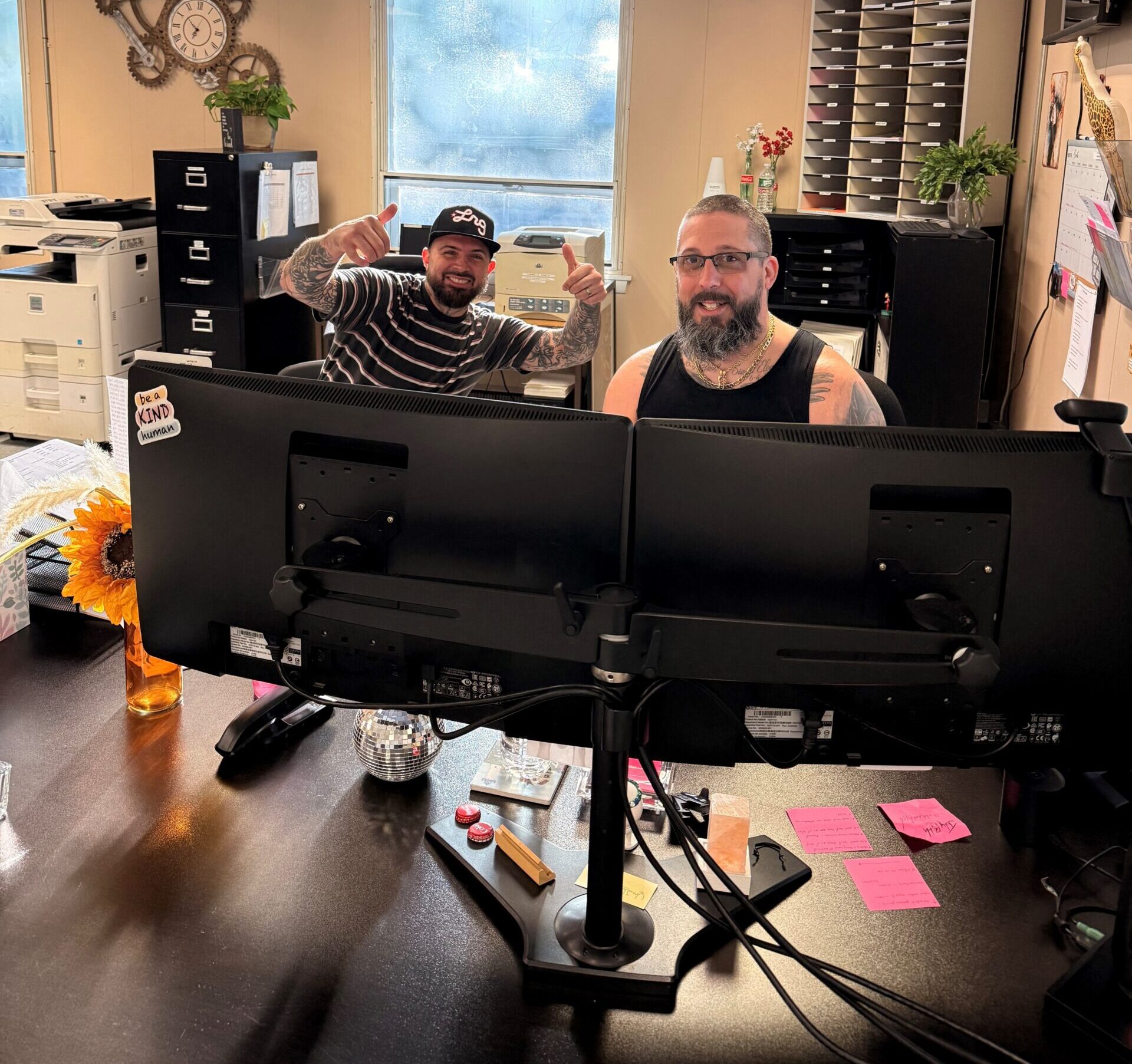
A Team of Two
That someone, of course, is Jose.
“Now I have Jose. He can deal with the things that I can kind of walk away from, and I can focus on looking at what’s going on internationally, where our delays are, where our cost is going.”
Jose handles all of the domestic operations and receiving, freeing James to focus on the international picture. James is candid about how far Jose has come since he started knowing nothing about the job.
“He’s pretty much a copy and paste of me. Dependable. On time. If he’s sick, he’s here. If he’s tired, he’s here.”
It’s a two-person department running the full shipping and receiving operation for a company shipping equipment worldwide, and James doesn’t talk about that as a limitation. He talks about it like a strength.
None of that happens in isolation, either. Tom Haas, Univex’s Plant Manager, oversees the building and operational logistics across the site, making sure James and Jose have the space, equipment, and support they need to keep that two-person operation running the way it does.
What Moves and What Waits
Ask James which piece of equipment he loves seeing leave the warehouse, and there’s no hesitation. It’s the PrepMates.
“They fly out of here faster than we can make them. There used to be a time where I had fifty of them in stock at all times. I can’t keep five in stock sometimes now.”
Similarly, the 30-quart planetary mixers move fast too, and James lights up talking about what it means when they clear out.
“It frees up so much space. It brings in the profit for us, and it shows that they’re selling.”
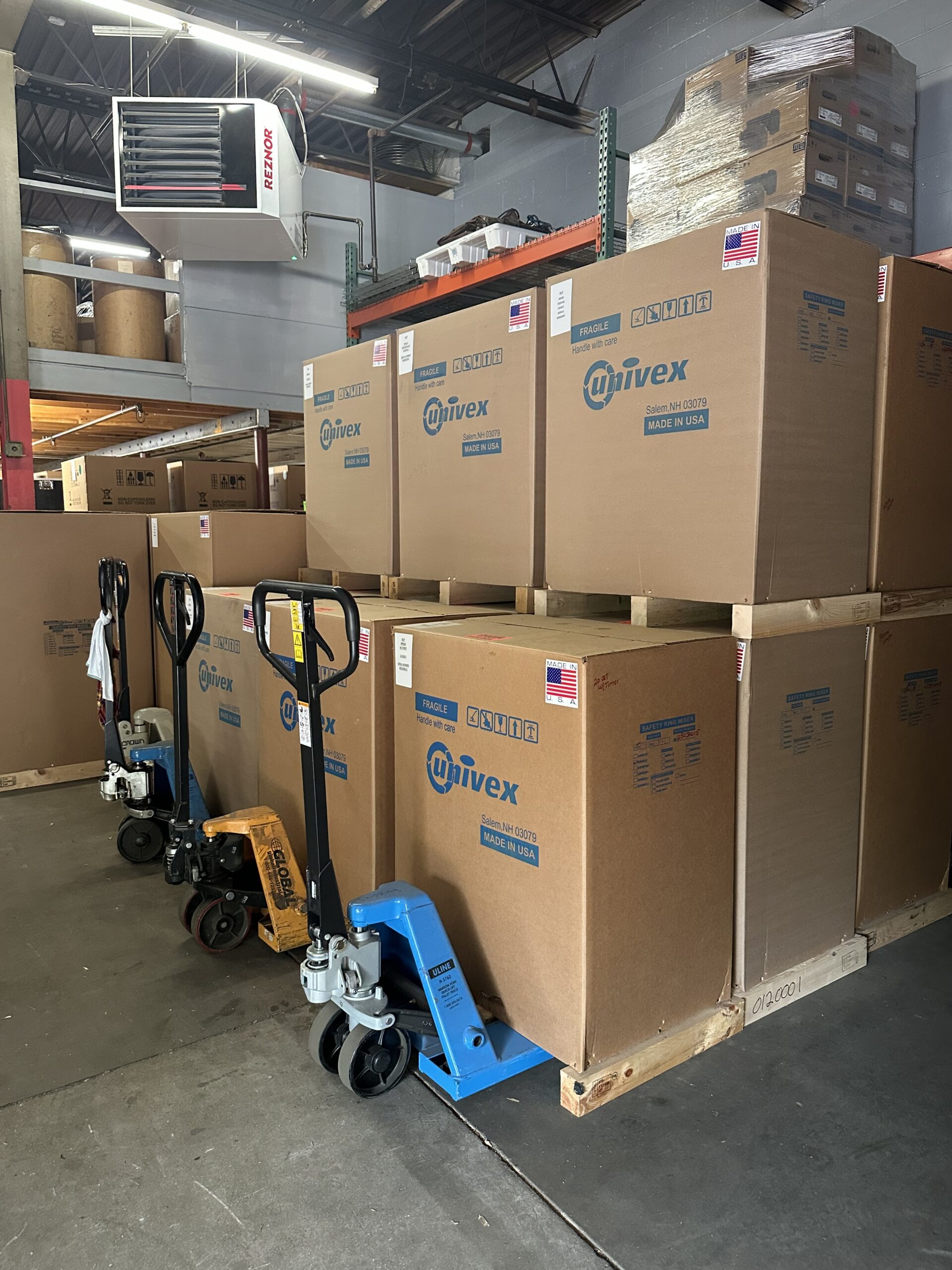
Not everything moves at that pace, though. A run of branded equipment has been crated, inspected, and ready to ship for some. The moment a national-chain order comes in, it can go straight out the door with ease; no build or QC time needed.
When It Absolutely Has to Go
Just like every warehouse, Univex has a fair share of fire drills. James’s approach to them is steady: figure out what’s actually urgent, then execute.
“I look at it and I tell them what’s real and what isn’t. When it comes to getting something out, we do our part. I get it typed, I get the carrier called, it’s ready to go, and it’s on the dock waiting to get picked up.”
The part he can’t control is what happens next. Carriers get overloaded and miss pickup windows, which means unexpected delays in getting equipment to its final home. That gap can cause friction with other team, and James is direct about where responsibility for that friction should sit.
“I can’t change the carriers,” James says. “I can’t make them get here. I can’t make them be available.”
It’s a reminder that shipping timelines carry some built-in uncertainty. Setting realistic expectations up front, and holding firm on them, goes a long way toward absorbing that uncertainty before it ever reaches the customer.
Built on Rhythm
The partnership between James and Jose runs on a weekly rhythm. James reviews what shipped, what didn’t, and where the week went well or fell short, for both of them.
“I try and plan for the next week. Like, hey, we kind of failed on this, let’s build that up a little more this week and not fail on that.”
Subsequently, that same rhythm shows up in the smaller, constant decisions that keep freight moving without damage. James carries a working memory of which carriers handle which products well, and he’s watching Jose build that same instinct in real time.
“I remember where this is going. I know that carrier destroyed it last time, so I’m going to give it to this carrier instead. And he’s learning that as he goes. He’ll ask, hey, should I send it with this one? I think they messed it up. Yeah, go with a different one.”
The Weight and Dimensions of Everything
Ask James how deep that knowledge actually runs, and the answer is almost startling in its specificity.
“I can tell you the weight and dimensions of everything in this building without looking at a picture.”
It’s the kind of institutional knowledge that doesn’t live in a manual anywhere. It lives in James, built up shipment by shipment over twelve years, and it’s slowly transferring to Jose the same way.
At the end of the each conversation, every manager is asked what he’d want his team to know if Univex shut down tomorrow, James didn’t have to think long.
“That I’m proud of them for trying as hard as they did. Us shutting down is not a fault on them whatsoever. They did their job. I’m glad they did their job, and I’m proud that I got to get them to where they are in their own career.”
That’s the Logistics department. Two (three) people , one warehouse full of institutional memory, and every shipment out the door on time.